A fraction of the bill
A body shop prices a repair by the panel it has to respray. A kit prices it by the chip you actually have.

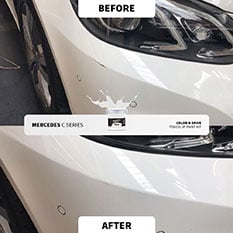
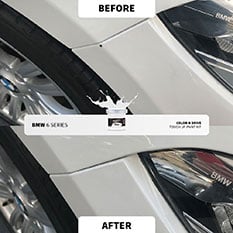
The damage starts the week you buy the car — grit off the road, a trolley in a car park, a door opened without looking. None of it needs a body shop. Give us the paint code your manufacturer already stamped on the car and the bottle is mixed to that exact formula.
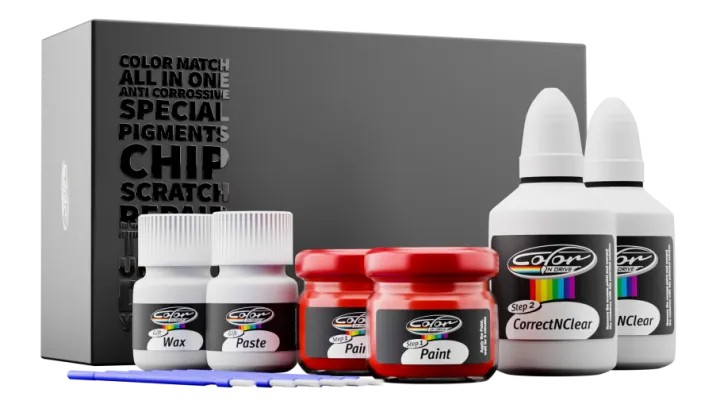
Colour matching is the hard part of the job, and a body shop starts from scratch every time.
The damaged area is cut back with abrasive paste and polished, until the true colour under the weathering shows.
A colour-matching camera scans the panel to work out which code and which tint the car actually carries.
The mix is sprayed onto a swatch card and compared against the panel, again and again, until it agrees. Three or four days in the workshop.
And then they respray the whole panel — that is what the bill is really for. Your car has carried its paint code on a plate since the factory. We mix from that code, and you paint the chip instead of the door.
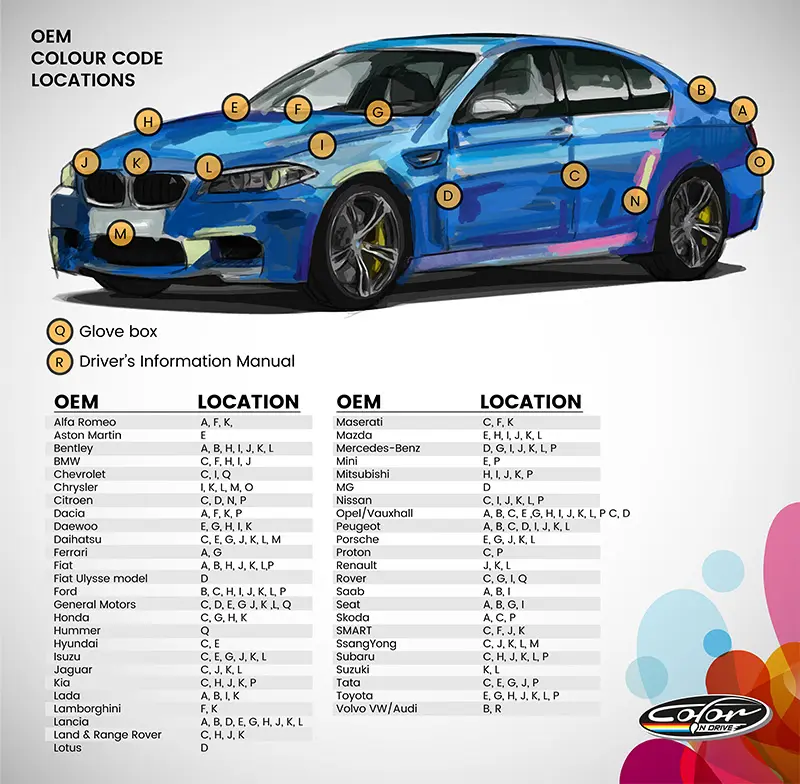
Every car carries a factory paint code on a small plate. Find yours, and we’ll match it to the exact original formula.
Car paint is four layers thick. What a repair needs depends entirely on how many of them the damage has cut through.
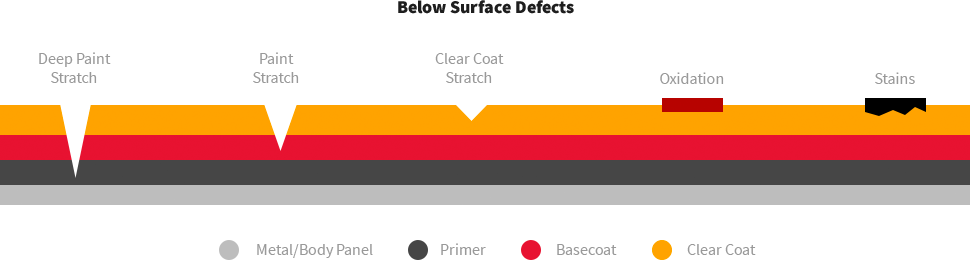
Clear coat · Basecoat · Primer · Body panel
Stains and oxidation come off with the polish — no paint involved. A clear-coat or paint scratch is exactly what the colour-matched bottle is for. A scratch down to bare metal wants primer first, and that is the one case worth a second opinion.
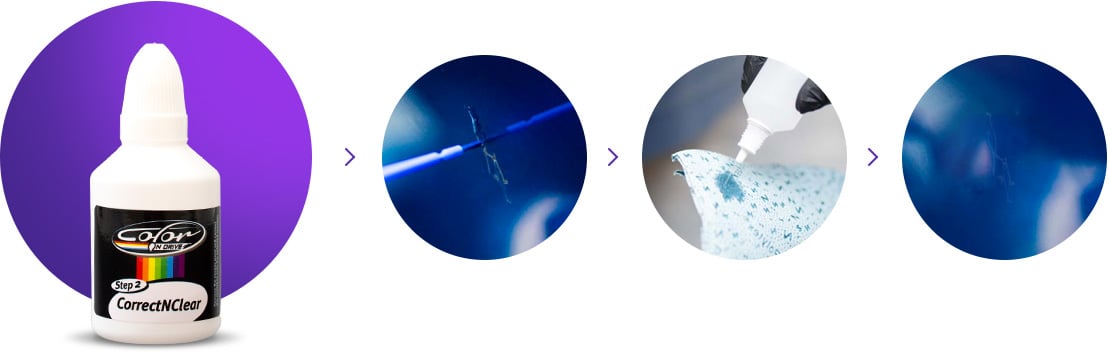
Clean. Wipe the chip, degrease the panel. Thirty seconds of prep is all it takes.
Apply. The precision tip fills the chip exactly — no drips, no brush marks, no blobs.
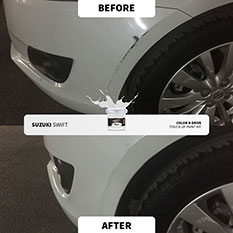
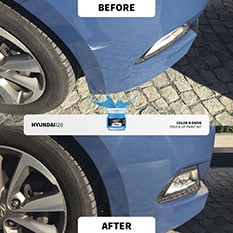
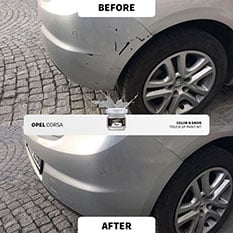
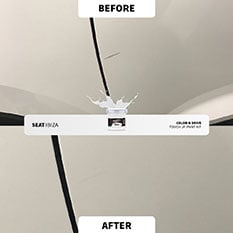
Ready. Seal and polish. The repair disappears into the factory finish.
Delivered to your door in 2 days · Free shipping · Money-back guarantee
This is what makes a first attempt not a permanent one. The corrector lifts excess paint and evens out an uneven pass, so you can redo the repair until it disappears instead of living with it. It is why the kit ships a second bottle.
A body shop prices a repair by the panel it has to respray. A kit prices it by the chip you actually have.
No booking a slot, no days on the bus, no hire car while you wait. An afternoon on the driveway and it is done.
A scratch is the first thing a buyer or a trade-in appraiser looks at. Removing it costs far less than the discount it invites.
A chip exposes bare metal, and bare metal corrodes. Sealing it now is maintenance; leaving it turns into bodywork.
Cars, motorcycles, vans, trucks and classics — every catalogue we carry, with the paint codes each brand actually used.